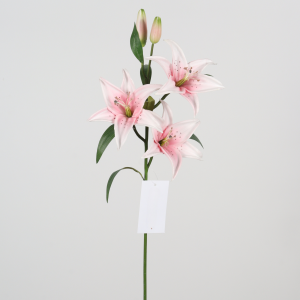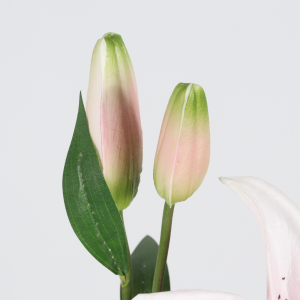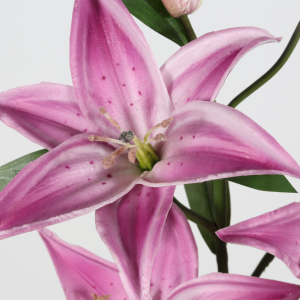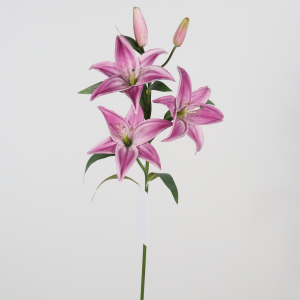
Calla lilies are elegant, striking flowers known for their smooth, trumpet-shaped petals that curl gracefully around a slender stem. Native to southern Africa, calla lilies typically bloom in spring and summer, depending on the variety. The natural flower has a relatively short bloom period, lasting only a few weeks, which can be a disadvantage for those seeking long-lasting floral arrangements. However, its unique, minimalist beauty, with its clean lines and rich color variations, makes it a highly coveted flower for both weddings and luxury décor.
Calla lilies come in a range of vibrant colors such as classic white, rich yellow, deep purple, orange, and pink. There are also bi-color varieties, where the petal color transitions from a darker shade at the edges to a lighter tone near the center, creating a stunning gradient effect. Due to their striking beauty and limited blooming period, calla lilies can be quite expensive, especially when used in large quantities for events or floral arrangements. Their popularity, combined with their short life span, has led to the rise of artificial calla lilies, which can be used to replicate the same sophisticated look without the concerns of wilting or fading.
The demand for artificial calla lilies is largely driven by their aesthetic appeal and their ability to offer long-lasting beauty without the need for maintenance. Unlike their natural counterparts, artificial calla lilies retain their vibrancy and structure for much longer, making them a popular choice for wedding décor, hotel installations, and retail displays. The quality of modern faux flowers, especially those made with latex, silk, or polyester, can closely mimic the texture and visual appeal of the real flower, making them an ideal option for projects that require consistency and longevity.
While traditional white calla lilies remain the most widely used, especially for weddings and upscale events, other colors such as pink, purple, and red have also gained popularity in recent years.
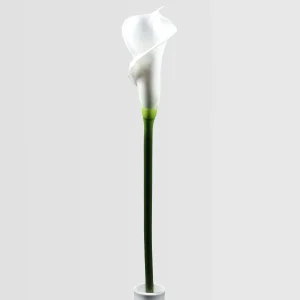
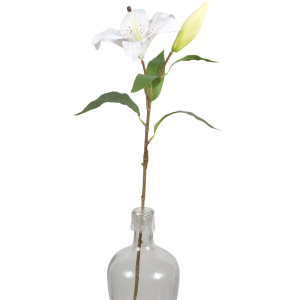
White Artificial Calla Lilies: Symbolizing purity and elegance, white calla lilies are timeless and often chosen for weddings and luxury events. They are frequently paired with greenery or gold accents to create a classic, refined look.
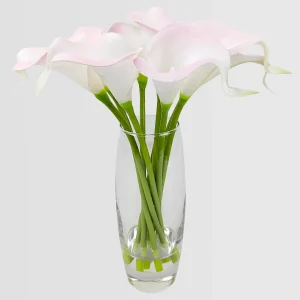
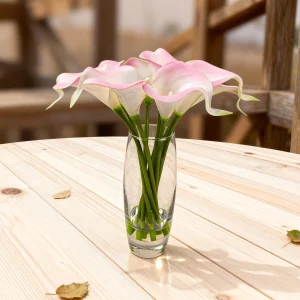
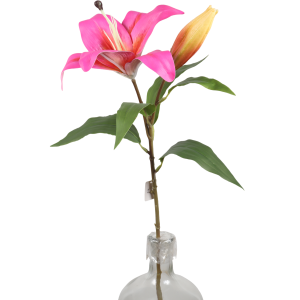
Pink Artificial Calla Lilies: Pink hues add a softer, romantic touch to any setting, making them perfect for bridal bouquets or vintage-themed décor. The delicate pink tones can be paired with ivory or cream flowers to create a gentle, harmonious palette.
Purple Artificial Calla Lilies: For a more dramatic and bold effect, purple faux calla lilies add deep, rich color to floral arrangements. They work well in autumn weddings, gala events, or contemporary floral designs, often paired with contrasting colors like white, silver, or black.
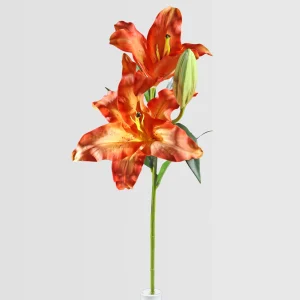
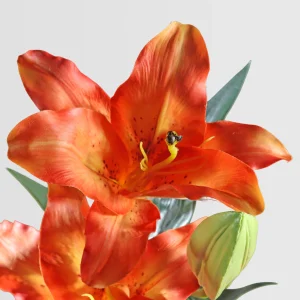
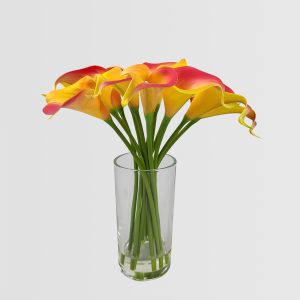
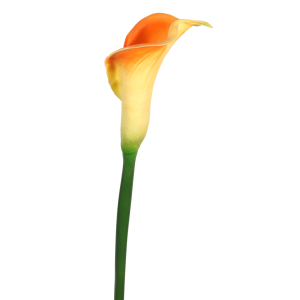
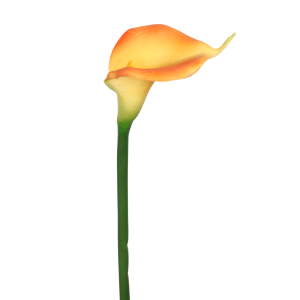
Yellow and Orange Artificial Calla Lilies: Bright, vibrant yellow and orange faux calla lilies evoke energy and warmth, making them ideal for summer events or festive décor. They pair beautifully with green foliage, creating a fresh, lively atmosphere.
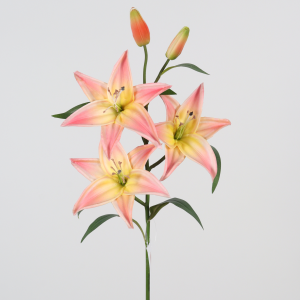
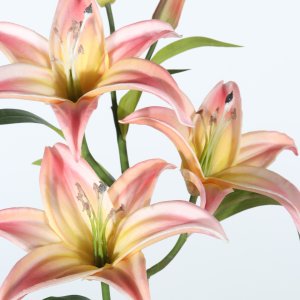
Bi-color Artificial Calla Lilies: Featuring two colors, often with a darker shade at the edges and a lighter center, bi-color calla lilies add a unique touch to arrangements, making them stand out in both modern and traditional designs.
When it comes to arranging artificial calla lilies, their sleek, elongated shape allows them to be used in various ways. For wedding arrangements, they are often included in bouquets, centerpieces, or aisle decorations. In commercial spaces, artificial calla lilies are used to create striking floral installations in hotel lobbies, restaurants, or retail windows, offering both beauty and durability.
The calla lily is defined by its clean, sculptural form: a single curved spathe that rises smoothly and wraps around a central spadix. Unlike layered flowers with overlapping petals, the visual quality of a calla lily depends almost entirely on the accuracy of its curve, opening angle, surface smoothness, and edge refinement. Any distortion, asymmetry, or uneven thickness becomes immediately visible. For this reason, curve consistency is one of the biggest technical challenges for any professional artificial calla lily manufacturer.
In mass production, even small variations in material temperature, molding pressure, or cooling speed can slightly alter the curvature and flare angle of the spathe. If this is not tightly controlled, different batches may show visible differences in openness, height profile, or edge tension, directly affecting visual uniformity in bulk installations. Achieving repeatable curvature requires highly stable tooling geometry, controlled forming parameters, and consistent material flow behavior across every production cycle.
The first key manufacturing focus is shaping the single-petal rolled structure. Precision molds are designed to reproduce the natural spiral roll of a real calla lily, including the smooth transition from the narrow base to the open rim. The forming angle is calibrated so the petal maintains a gentle, continuous curve rather than a sharp fold or flat surface. Material elasticity is balanced carefully — soft enough to avoid stress marks or surface whitening during bending, yet firm enough to hold the intended curve after cooling and long-term handling.
The second critical control point is edge thickness management. In natural calla lilies, the rim appears thinner, softer, and slightly translucent compared with the main body of the spathe. To replicate this effect, mold cavity depth and material distribution are engineered to gradually reduce thickness toward the edge, often within controlled tolerance ranges rather than uniform wall thickness. This creates a visually lighter edge while maintaining enough structural strength to prevent tearing, curling, or deformation during shaping and repeated adjustment by installers.
The third structural challenge lies in secure spadix fixation. The flower center must remain perfectly aligned within the curved spathe while allowing slight flexibility for handling. Internal anchoring structures and reinforced bonding points are positioned at the base of the bloom to lock the spadix in place without creating visible stress marks or surface distortion. The connection must resist rotation, loosening, and vibration while maintaining a clean exterior profile, especially important for tall stems and upright floral installations.
By controlling curvature geometry, thickness transition, and internal fixation with high precision, manufacturers are able to produce faux calla lily flowers that retain elegant symmetry, smooth surface flow, and stable form consistency across bulk production.
Have questions about our brand, collection, partnership, or anything else? Reach out to us today to experience our excellent and personalized service.
Bienvenido a nuestra avanzada fábrica de flores artificiales. Con una amplia experiencia en exportación, ofrecemos flores de imitación diversas y de alta calidad y prestamos servicios de ODM y OEM.
Copyright © 2024 Trustfloral. Todos los derechos reservados.